It’s Now Or Never
Unreliable memories #1

I’ve spent many, many hours riding bikes over the last decade, part of a continuing effort to “get into shape”, though what form that shape takes and whether I was ever in it to begin with is in some doubt. Puffing and sweating along our quiet country roads, I listen to podcasts. Lots of podcasts. My current favourite is the marvellous A History Of Rock in 500 Songs, by Andrew Hickey, and a few days ago I reached episode 82: “Are You Lonesome Tonight?” by Elvis Presley.
I am not now, nor have I ever been a Presley fan. I was too young when he was in his rock’n’roll pomp, and when music began to mean something to me it was the year of The Beatles, but I am very happy to acknowledge his wonderful voice and admit his importance to the development of rock music and popular culture.
This is not, therefore, an essay about Elvis. In Episode 82, Hickey tells the story of how, newly released from his two years with the US Army in Germany, Presley recorded some of his biggest hits. One of those, like French cakes and coffee, sent me a long way down a memory lane, to a place where the roads run through machair and lochs, have weeds growing in the middle of them, and the 1960s were yet young.
I started school in 1959. My first term was in a primary school in Llanrumney, a suburb of Cardiff chiefly noted for its large blocks of council flats, in one of which we lived. I am told that one of the kids I played with in the courtyard at the back of the block was Shirley Bassey’s daughter, but I have no memory of her. My father was a junior civil servant in the shipping office in Cardiff, and in pursuit of promotion he applied for a job as airport manager on the island of Tiree, the outermost of the Inner Hebrides, a flat place of wind and spectacular beaches. History does not record if he was the only applicant, but we moved there in early 1960. The junior bureaucrat suddenly found himself as important to the island community as their doctor or the vet, and our lives changed irrevocably.
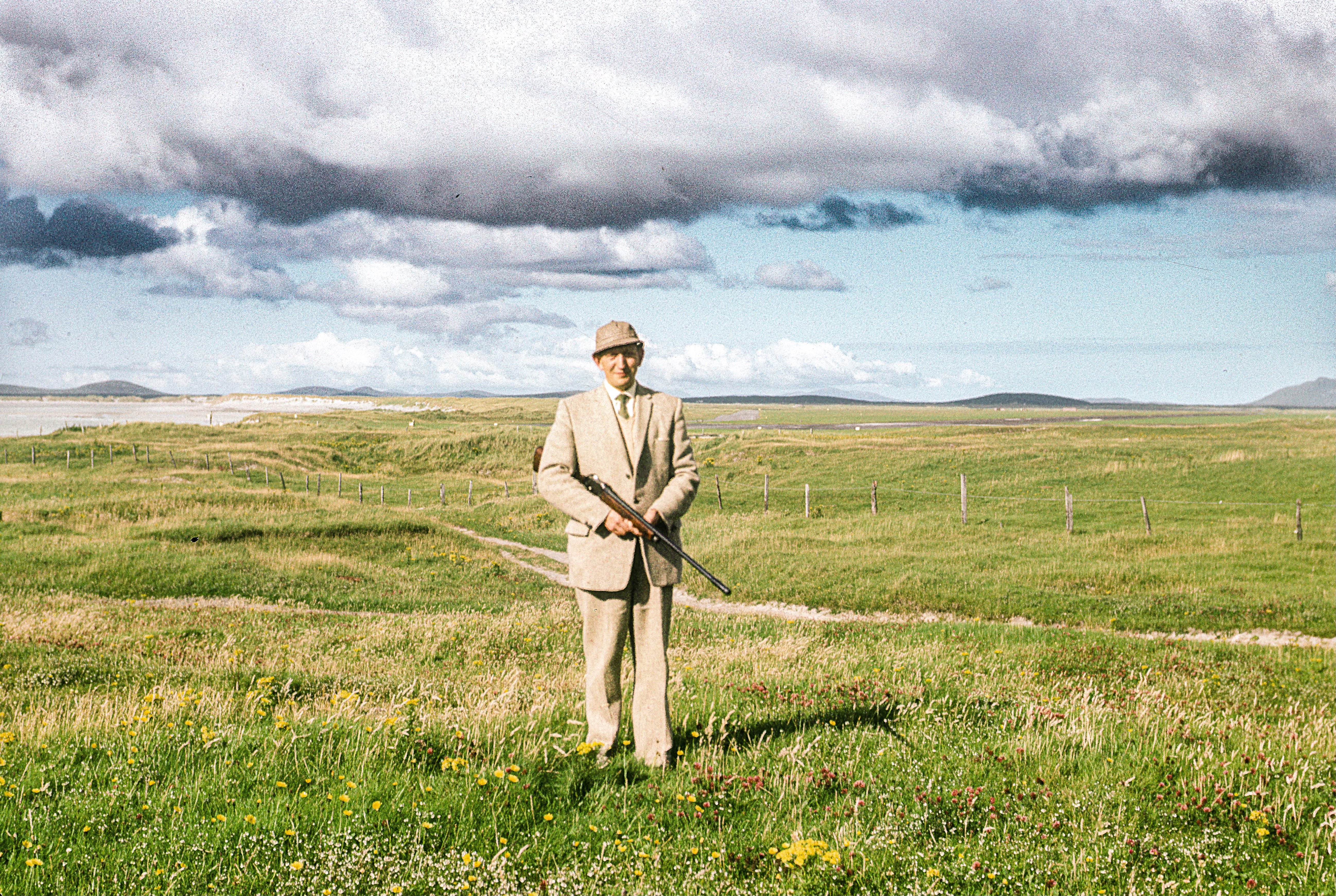
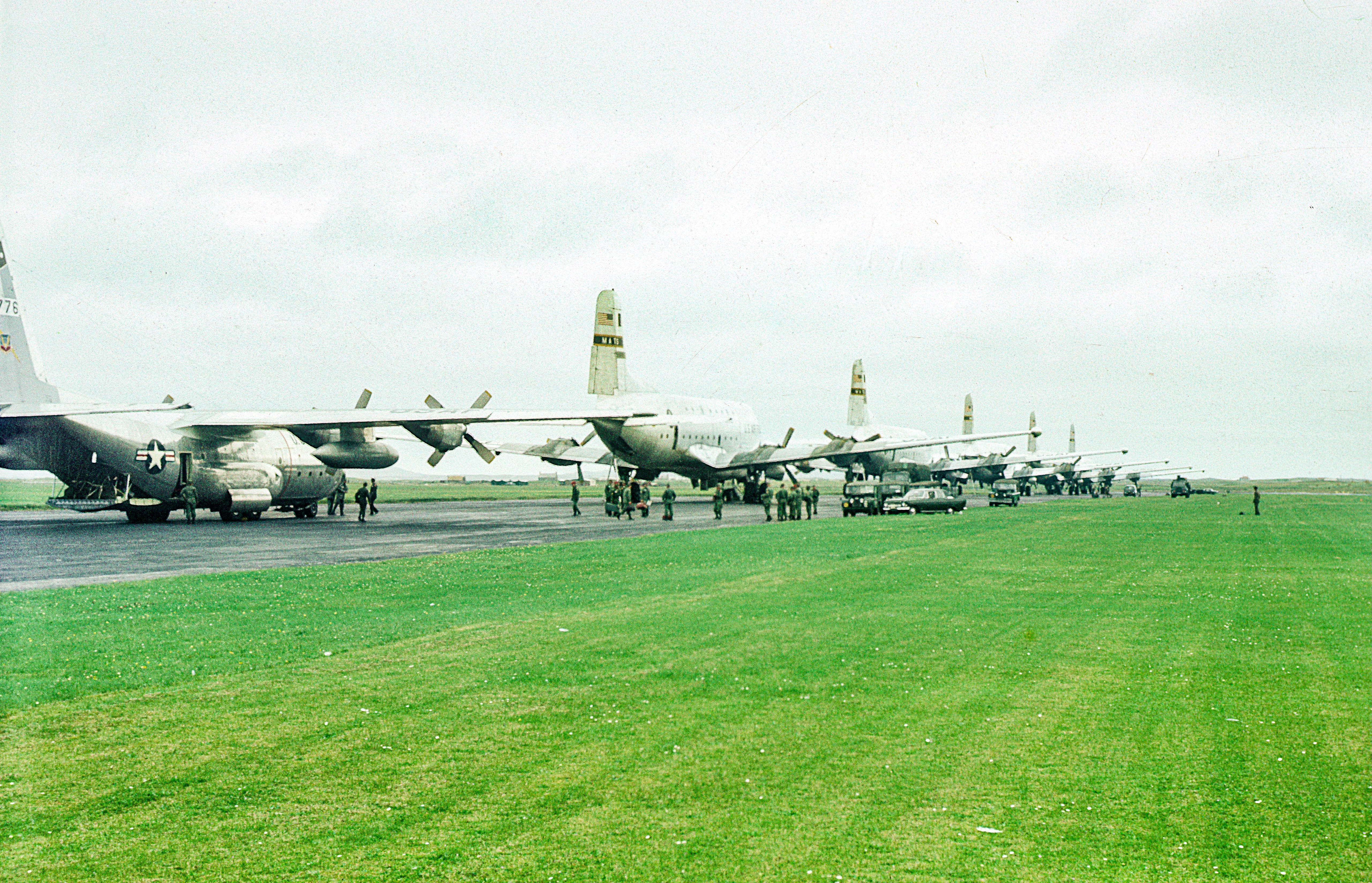
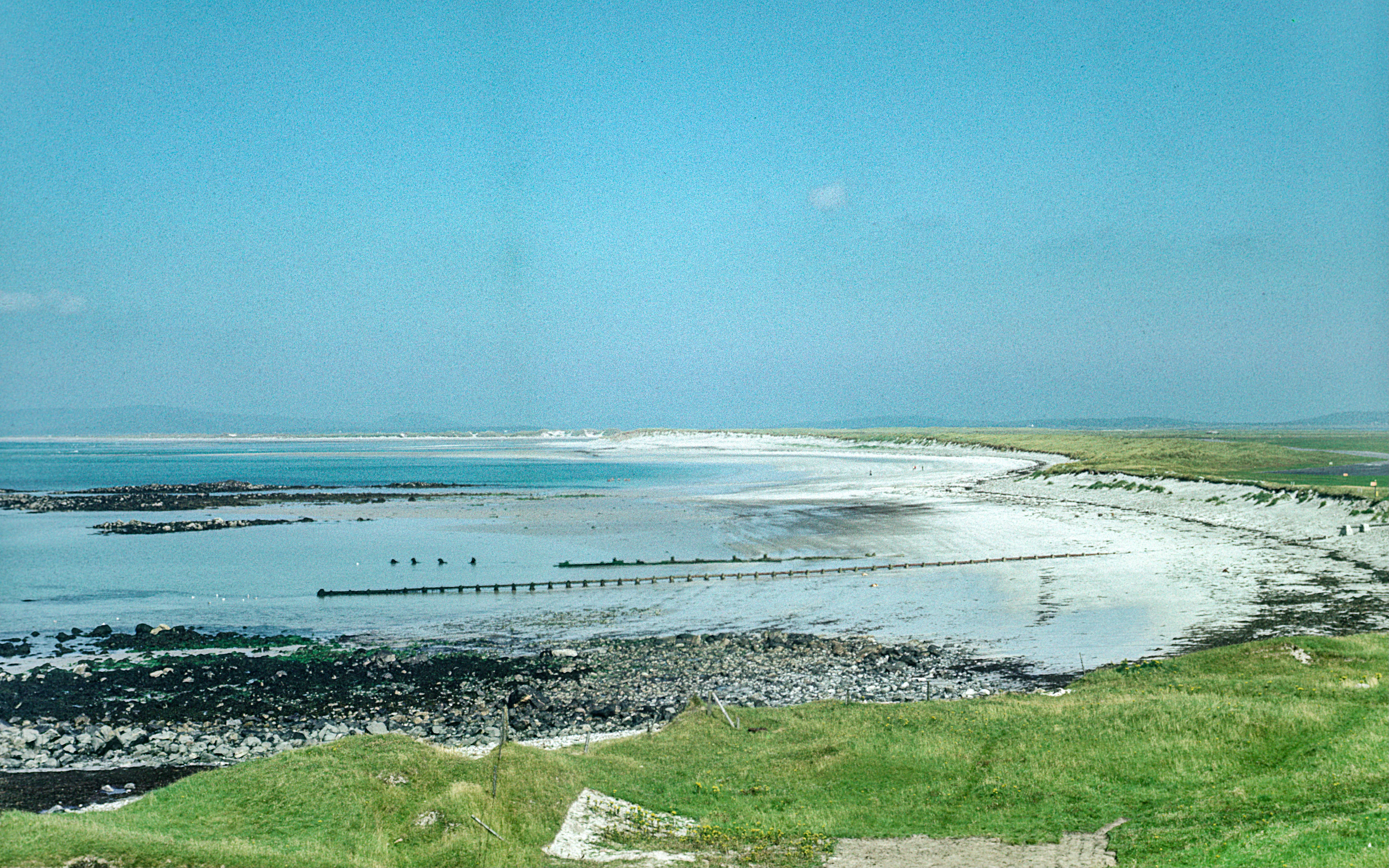
Three years later, after another promotion, he moved us to Benbecula, a low loch-strewn island sandwiched between North and South Uist in the middle of the Outer Hebrides. The airport there was a much busier affair - like Tiree, a relic of WW2, with long runways designed to cope with the RAF Coastal Command planes that provided cover for allied convoys and hunted German submarines. There were regular British European Airways flights from Glasgow, flying Vickers Viscounts on a triangle with Benbecula and Stornaway, and a fair bit of military traffic serving the rocket testing range on South Uist.
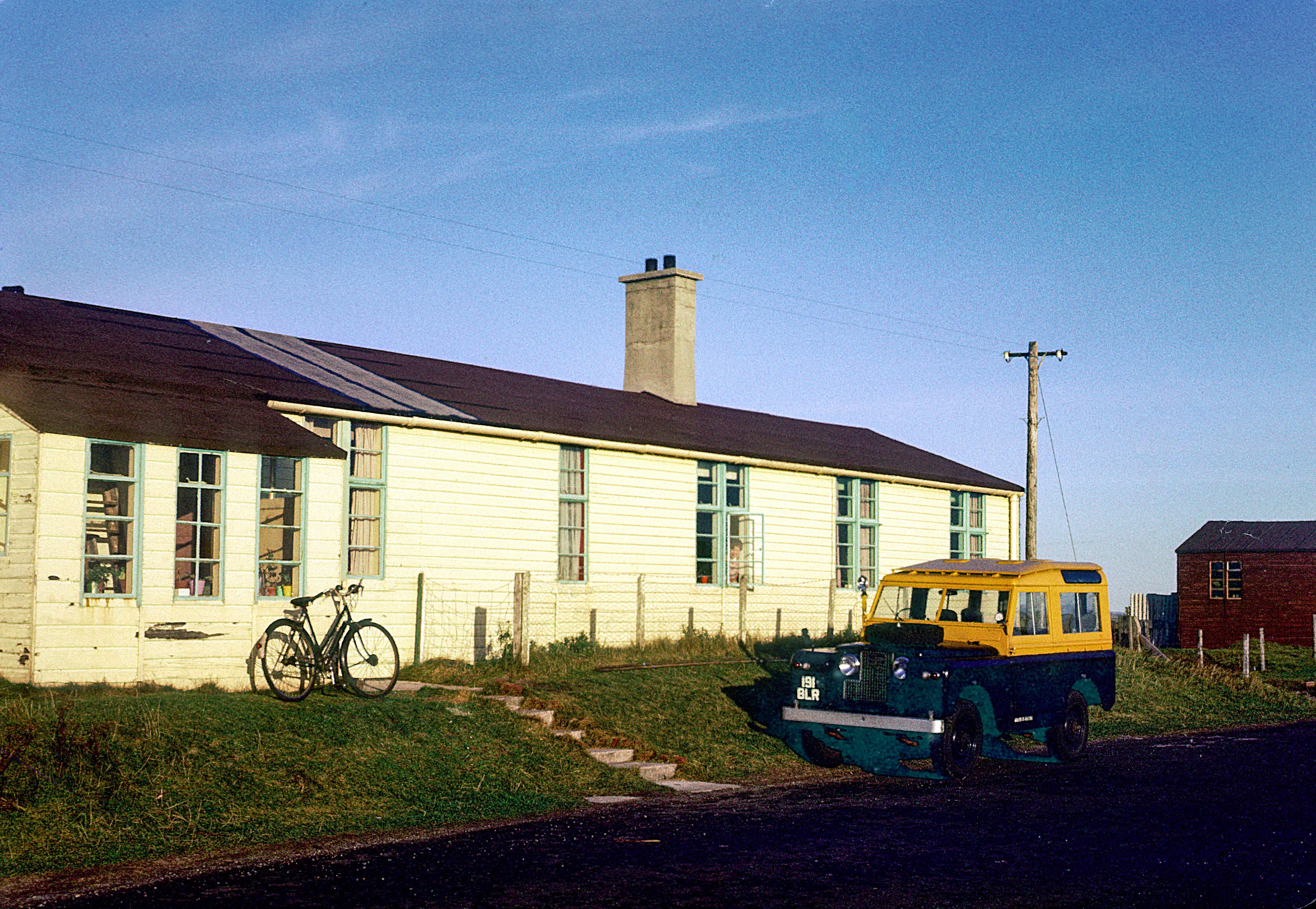
We lived in a small wooden house just outside the airport gates, and I went to school in the nearest village, Balivanich. On my first day I was given strict instructions that if asked, I should say I was a protestant. This was important, because sandwiched between the predominantly Catholic South Uist and protestant North Uist, the population of Benbecula was a mixture of both, and so the school had separate morning assemblies for the two religions. I’d never encountered Catholics before, so I asked my Sunday School teacher - my mother - what they were. The same as us, she said, ecumenically, “but they have more books in their bible”.
For entertainment, apart from films shown in one of the Nissen huts left over from the war and an occasional ceilidh, we had radio. No television. It didn’t reach the Hebrides until many years after we left. Our radio was a big piece of polished wooden furniture, with a substantial loudspeaker behind a cloth grille driven by valves that could be seen glowing through the holes in the back, and which gave off a warm dusty smell after a few minutes of use. In order to pick up the BBC Light Programme on long wave, it was attached to an aerial strung between two poles at the back of the house. It had what my father described, with some pride, as ‘a very nice tone’.
The BBC didn’t play a lot of pop music in the 50s and early 60s, partly because of Musician’s Union restrictions on needle time and partly because of inherent conservatism. Its one concession to modernity was Pick Of The Pops on a Sunday afternoon, fronted by the preternaturally enthusiastic Australian Alan “Fluff” Freeman. This was a straightforward chart countdown, and a hugely important part of any young music enthusiast’s week. 1963, of course, was the year when The Beatles exploded into the national consciousness, when the “swinging” sixties really started. The UK charts had seen nothing like their ascent that year, and the building excitement filtered its way through the BBC’s restrictions to Benbecula, carried on the hisses and crackles of steam radio.
By the end of the year, top of my Christmas list was a plastic Beatles guitar, which my mother refused point blank to purchase. With the benefit of 60 years of hindsight I can see her point, but at the time it felt cruel and harsh. It may have been out of some sense of guilt, then, that one day my father came home from work with a Dansette - a portable record player that was popular then and is collectable now. It only played 45 rpm singles, but it was more or less state of the art - or at least, the art as it had been in the late 50s. All we needed were records to play on it.
As you might imagine, record shops were not thick on the ground in the Outer Hebrides. The NAAFI where my father probably picked up the Dansette didn’t stock records, so one Saturday my parents made an expedition to Lochboisdale, the small port at the southern end of South Uist, where there was a general store that might be able to help. It could. They returned and presented me with the only pop disc the store had: It’s Now Or Never, by Elvis Presley.
It’s Now Or Never was a massive world-wide hit for Presley, recorded and released in 1960. That they still had a copy in Lochboisdale in 1963 suggests both the slow pace of record sales in the Outer Hebrides, and just how popular it had been. The melody is instantly recognisable, because it’s lifted from the Italian song O Sole Mio, much loved by operatic tenors and one of the signature songs of Mario Lanza, one of Presley’s favourite singers. It may be better known by anyone present in the UK in the early 80s as Just One Cornetto, the Walls Icecream TV ad for the cold confection known as a trumpet in the antipodes.
Elvis emotes masterfully, the Jordanaires croon in the background, and Nashville’s slickest musicians give the song an undeniable swing and professional gloss. To my nine year old ears, that was distinctly old-fashioned when compared with the energy and wild enthusiasm of Please Please Me or She Loves You. Merseybeat may have been less polished, but it was more fun. I can’t recall whether my disappointment was obvious to my parents. I like to think it wasn’t, but then we like to think many things as we get older, and not all them are true.
Mum and dad bought a few singles themselves - Harry Secombe and Shirley Bassey (of course) were parental favourites, and I still have a very soft spot for burly Shirley’s version of I (Who Have Nothing).
However, it took a move back to Wales at the end of 1964, and weeks of saving up pocket money before I was able to buy my own first record: Ticket To Ride. The rest, as they say, is history, readable in the piles of LPs and CDs secreted around Limestone Hills.
At sixty years distance, my memories of our brief spells on Tiree and Benbecula are patchy, but things I learnt there have echoed down the rest of my days. One of the lessons of having an airport manager for a father was the importance of weather and forecasting. I became familiar with isobars and wind speeds, types of clouds and synoptic charts. The weather station on our farm and my book about climate change are there because of the indulgence of met officers, and Hebridean sunshine and gales.
Another major benefit was regular access to aeroplanes and the excitements of flying. Rockets fired from the South Uist launch site were tracked by radars on St Kilda, a remote and extremely windswept group of islands 60km west of North Uist. The army team on the island got a weekly air mail drop by a flight from Benbecula, and at some point in 1964 my father arranged for me to join one. I got to sit next to the pilot on a twin engine Piper Aztec. A rear window was removed before we took off, a large sack of mail loaded, and we headed out over the very blue Atlantic. The pilot let me hold the controls, showed me how to climb (a little) and dive (a bit), but he was firmly in charge as we swooped down towards the main island.
We crossed low over the settlement in Village Bay, with a few people waving below us. The pilot’s assistant heaved the mail bag out of the window, and we began to climb out to the west. As we crossed the cliff tops - St Kilda has the highest sea cliffs in Britain - the updraft from the gentle westerly blew us upwards at what seemed like astonishing speed, but was probably just a bit of a bump, then we were turning back towards the airfield. A bit more flying by me, and that was it. A great day.
All very exciting for a nine or ten year old, of course, but the real point of the story didn’t reveal itself until 1966. Back at Benbecula, I thought I might write a letter about my flight to one of my favourite comics, The Hotspur, to see if I could win one of the prizes they offered for “letter of the week”. And I did. A Dinky Toy road transporter set that immediately became my most treasured possession.
Two years, and two moves later, I was in my first term in the second year at a grammar school in Kent. Being a new boy, and keen to earn some sort of status in this very different world, I told my classmates about the trip to St Kilda and the letter to The Hotspur. “I remember that”, said Ernie Meakin, and the next day he brought a clipping of my letter into school to show me. It was a limited sort of fame, but I have never forgotten how chuffed I felt at the time. Is that why I became a journalist? Probably not, but it definitely sowed a seed. Thanks Ernie!